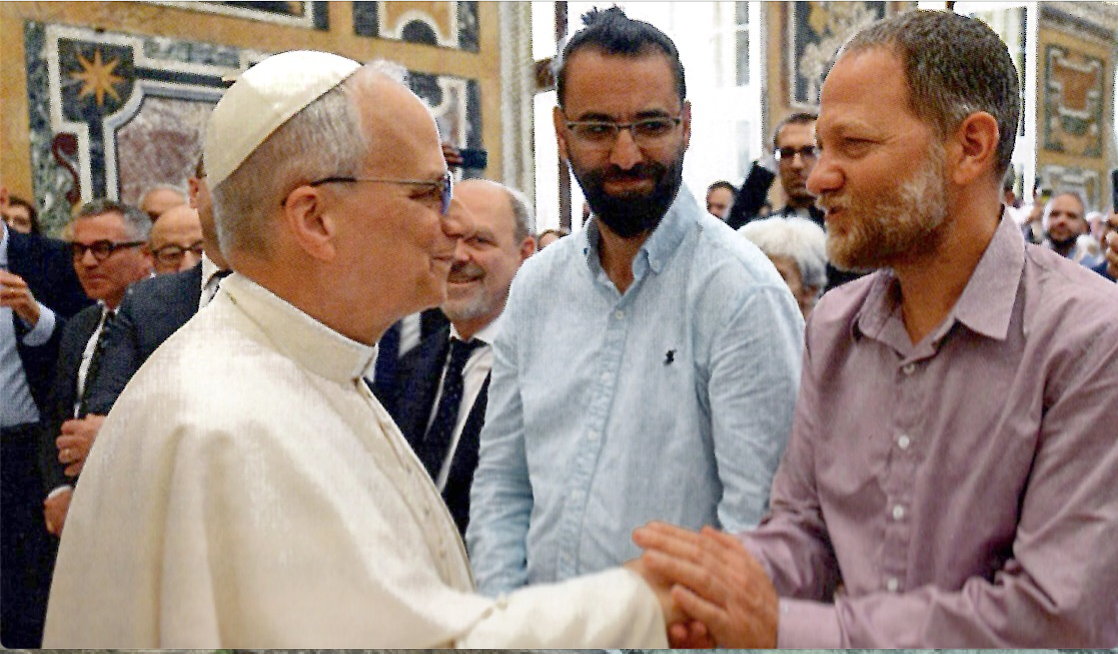
I have just started reading The Future Is Peace: A Shared Journey Across the Holy Land (New York: Crown, 2026), by Aziz Abu Sarah and Maoz Inon. Sarah, a Palestinian, lost a brother in the First Intifada: a civil uprising against the Israeli military occupation of the West Bank and Gaza (1987-1993), culminating in September 1993 in the Oslo Accords between Israel and the Palestinian Liberation Organization (PLO). According to B’Tselem (The Israeli Information Center for Human Rights in the Occupied Territories), 1,376 Palestinians and 94 Israelis were killed in these protests. Inon, an Israeli, lost his parents in the Hamas terrorist assault on October 7, 2023, in which 1,218 Israeli civilians were killed and 252 taken hostage. Yet the two have become not only fast friends, but allies in their quest for peace in the Holy Land through InterAct International. The picture above is from their 2025 audience with Pope Leo XIV–the first Palestinian-Israeli peace activists to have been so invited.
Early on, I was captivated by this quote:
We understand that in the face of suffering and grief, when so many lives have been lost and families shattered, talking about peace can feel too vulnerable—dangerous, even. When each side believes that the other is a threat to its existence, talk of peace can feel like a betrayal of one’s people. Wherever we look in the world, we find these growing divides. Siloed into a false mentality of us versus them, we perpetuate zero-sum arguments fed to us by the politics of fear. The biblical Book of Proverbs says, “Where there is no vision, the people perish.” And today, we are too often sold a vision that leads to more violence, instead of one that leads to harmony and a strategy for lasting peace (Sarah and Inon, 2-3).
The raw honesty of these words, from men who have every reason to be moved by their grief to the hatred they decry, is profoundly moving. But also, given my current work on the book of Proverbs, I was drawn to their use of a quote from Proverbs 29:18: “Where there is no vision, the people perish; but he that keepeth the law, happy is he” (KJV).
The quote struck me for a somewhat embarrassing reason. Early in my ministry, I worked as a summer associate at Stout Memorial UMC in Parkersburg, WV, under the tutelage of Rev. Jim Denney. Jim, following a practice he slyly referred to as “substitutionary atonement” (“Here am I, send him”) had volunteered me to do the devotional for our monthly Ministerial Alliance meeting. I had decided to use as my Scripture for that meeting a Bible passage I was sure I remembered from somewhere: “Where there is no vision, the people perish.” However, when I went looking for that verse (I was sure it was from Hosea, or maybe Amos), I couldn’t find it!
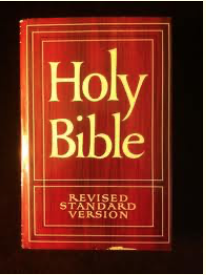
The reason I couldn’t locate the text back then was that in the Bible I was using (not the King James, but the RSV), the translation was quite different: “Where there is no prophecy, the people cast off restraint“! Incidentally, both the NRSV and the recent NRSVue stay with that reading.
The Hebrew is be’eyn khazon yippara‘. Sure enough, yippara‘ does appear to mean “run wild; go out of control” rather than “perish.” However, khazon never means “prophecy;” it always (35 times in the Hebrew Bible) means “vision.” Accordingly, the CEB has “When there’s no vision, the people get out of control;” and in the Jewish Publication Society’s English translation of the Tanakh (JPSV), this passage reads “For lack of vision a people lose restraint.”
Why then did the RSV (and after it, the NRSV and NRSVue) read “prophecy”? There is some ancient warrant for that reading. In the Septuagint, which is often rather free in its rendering of Proverbs, the Greek word is exegetes: “interpreter” (or exegete!), which appears elsewhere only in the account of Pharaoh’s dream (Gen 41:8, 24), for which he seeks an interpreter. Similarly the Latin Vulgate reads cum prophetia defecerit dissipabitur populus: “When prophecy shall fail, the people shall be scattered abroad.”
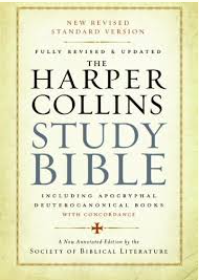 However, the RSV’s decision was more likely due to the second, parallel line of Proverbs 29:18: “but blessed [the NRSVue has “happy”] are those who keep the law [Hebrew torah].” This suggests the familiar pairing “the law and the prophets” (for example, Luke 24:44-45, and the Prologue to Ben Sirach). In the HarperCollins Study Bible, edited by Harold W. Attridge, Claudia V. Camp and Carole R. Fontaine’s note on this verse (HCSB 2006, 886) refers back to Prov 28:4, 7, 9:
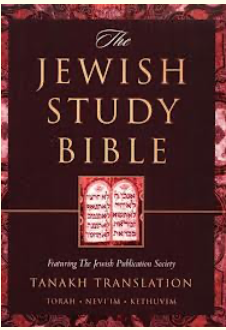 Similarly, in the JPSV, the full verse is “For lack of vision a people lose restraint, / But happy is he who heeds instruction.” In the Jewish Study Bible, Michael Fox’s annotation of this verse reads,
Vision means prophecy, which was a source of discipline and reproof for Israelite society. Instruction is ‘torah,’ which in Proverbs usually means parental instruction. Here it possibly refers to God’s Torah (see also 28.9) (JSB 2004, 1493).
The word khazon (“vision”) appears only here in Proverbs. Guidance for the meaning of “vision” in this context may be provided by the editors of Proverbs, who include this verse in a collection (Proverbs 25–29) with the heading, “These are other proverbs of Solomon that the officials of King Hezekiah of Judah copied”–suggesting that we read these proverbs in the context of that southern king’s reign. The concept of vision characterizes Judean prophecy. The prophetic books of Isaiah, Nahum, and Obadiah are all called “visions” (Hebrew khazon; see Isa 1:1; Nah 1:1; Obad 1:1; and compare Hab 2:2). Ezekiel sees “visions of God” (mar’ot ‘elohim; Ezek 1:1); Habakkuk sees (khazah; perhaps better “envisions”) the oracle (Hab 1:1); and Micah and Amos curiously “see” the word of the LORD (Amos 1:1; Mic 1:1).
By contrast, revelation comes to the Israelite Hosea through the ear, not the eye: “The word of the LORD” comes to him (Hos 1:1), rather than a vision. The same is true of other prophets related theologically and ideologically to the northern, Levitical ideals given fullest expression in the book of Deuteronomy: thus, Jeremiah (1:1-2, 9-10) and Zephaniah (1:1) also receive the word (and, as noted above, Amos and Micah “see” the word). In time, the idea of revelation by the word prevailed over the vision, as the title nabi’ (“prophet”; literally, “one called”) prevailed over the title khozeh (“visionary”). Therefore, the postexilic prophets Haggai, Zechariah, and Malachi all receive the word of LORD (Hag 1:1; Zech 1:1; Mal 1:1), as do Jonah (1:1) and Joel (1:1).
While the RSV/NRSVue rendering “prophecy” makes sense, it is important to remember that the Hebrew word used here actually means “vision.” Accordingly, the use to which Sarah and Inon put this verse from Proverbs is certainly apt. The violence and chaos evident in our own nation’s “policy” with regard to Israel, Palestine and the Middle East generally certainly reflects the lack of any coherent vision. May we learn from Sarah, Inon, and other faithful witnesses to embrace a vision of peace, rather than of endless and pointless conflict.

AFTERWORD: As some of you may know, I have been recovering (far more slowly than I would have wished–a reminder that I am not a kid anymore!) from sinus surgery. It is a joy to be able once more to write and think! Thank you for you prayers, and for your patience with me!