
I was surprised to learn yesterday that thousands, indeed hundreds of thousands, of people had heard of a prediction unfamiliar to me–that the Rapture would occur September 23-24, 2025–and that many who heard this prediction believed it.
An article in the New York Times traced this prediction to a video posted by South African Christian Joshua Mhlakela:
In the video, he says that Jesus came to him in a dream in 2018 and told him, “On the 23rd and the 24th of September, 2025, I will come to take my church.”
The context, as Mr. Mhlakela understood it, was the 2026 FIFA World Cup. “He was telling me that by June 2026, the world is gearing up toward the World Cup,” he said, but because chaos would descend after the Rapture, “there will be no World Cup in 2026.”
According to Google Trends, searches for “rapture” and “the rapture Tuesday” started to climb around Sept. 20. The hashtag #rapturenow leads to over 311,000 videos.
Sadly there is nothing new about this kind of end-time hype. The Rapture did not occur yesterday, obviously, and although this day is not yet over, I am writing confidently to predict that it will not happen today, either. In fact, the Rapture will not happen at all.

How can I say that? And why do I say it so forcefully? A bit of personal history, friends. Over fifty years ago, when I was fifteen, I received the baptism of the Holy Spirit at a prayer meeting in my family’s living room. I have no doubt about the reality of that experience, or of its profound effect on my life. Although I had grown up in the church, I now felt an increased zeal for the Lord. I always wore (as in this picture) a cross around my neck. I carried my Bible–for which I had a renewed and passionate hunger–with me everywhere, and was always careful that it was on top of my pile of schoolbooks. I told everyone about Jesus: in study hall, in the lunch line, on the school bus–whether they wanted to hear or not. I covered my notebook with Christian slogans: “One Way,” “PTL” (Praise the Lord), and of course, “In case of Rapture, this notebook will be abandoned.”
You see, one of the cornerstones of my young, passionate faith was the certainty that I would one day, very soon, be taken up out of the world in the Rapture. I never expected that I would ever grow up and marry, that I would ever have children, or a career. I knew–I knew–that the world was going to end very soon. Curiously, for all my love for Scripture and my passionate study of God’s Word, I never realized that the Rapture was not in the Bible.
If you search any Bible concordance for the term “Rapture,” you will not find it (for a little about where the notion of the Rapture originated, see this blog). Not only do neither Matthew 24:40-41 nor 1 Thessalonians 4:13, the two passages commonly alleged to describe the Rapture, use that term, but neither describes a miraculous end-time escape from the world.
Matthew 24:40-41 reads,
At that time there will be two men in the field. One will be taken and the other left. Two women will be grinding at the mill. One will be taken and the other left.
For many readers, the one “taken” is Raptured, taken up to glory. The one left is, as Timothy LaHaye’s series title has it, “Left Behind,” to suffer the torments and tortures of Tribulation. But I am not at all persuaded that this is the best reading of that verse.
Matthew 24 is Matthew’s version of the Synoptic apocalypse: a description of the end of time (compare Mark 13 and Luke 21) that offers warnings of coming persecution and trial, not instruction on how to escape them. Indeed, Jesus tells his followers, “They will arrest you, abuse you, and they will kill you. All nations will hate you on account of my name” (Matt 24:9). Jesus compares those days to “the time of Noah,” when devastation came suddenly upon a people unprepared:
In those days before the flood, people were eating and drinking, marrying and giving in marriage, until the day Noah entered the ark. They didn’t know what was happening until the flood came and swept them all away (Matt 24:37-39).
Likely, then, the “one taken” is not saved, but lost: perhaps metaphorically taken by death or disaster, or perhaps quite literally taken–arrested by the Roman authorities, and hauled away to prison or forced labor.

Matthew 24 is not after all about us “going up,” but about Jesus “coming down”! The return of Jesus, the Human One (literally “Son of Man”), will be unexpected, and unpredictable: “But nobody knows when that day or hour will come, not the heavenly angels and not the Son. Only the Father knows” (Matt 24:36; emphasis mine). Jesus himself does not know when this will be! He compares himself to a thief:
But you understand that if the head of the house knew at what time the thief would come, he would keep alert and wouldn’t allow the thief to break into his house. Therefore, you also should be prepared, because the Human One will come at a time you don’t know (Matt 24:43-44).
The point, then, is to be ready–whenever his coming might be–so that we will not be taken unawares.
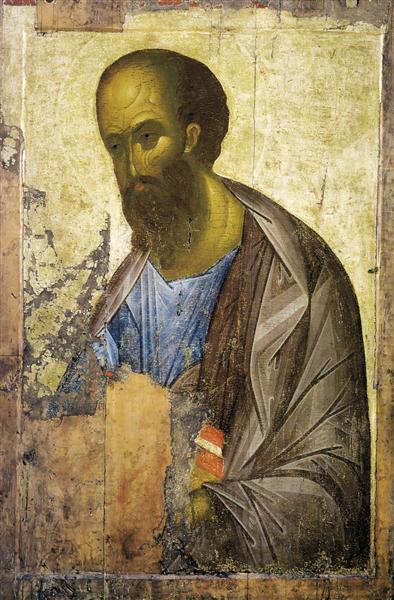
1 Thessalonians, Paul’s first letter, is the oldest book in the New Testament (dating to around 50 CE). Paul writes to offer reassurance to a struggling church: the first he had established in Europe (see Acts 17:1-10).
The Christians of Thessalonica were concerned because some of their members had died: perhaps from persecution, but perhaps too from illness or old age (1 Thes 4:13-14). Believing, as Paul had taught them, that Christ’s second coming was imminent, they feared that those faithful dead would have no share in Christ’s kingdom. Paul, however, assured them that, far from being left behind, those believers who had died would have the inside track in the world to come:
What we are saying is a message from the Lord: we who are alive and still around at the Lord’s coming definitely won’t go ahead of those who have died. This is because the Lord himself will come down from heaven with the signal of a shout by the head angel and a blast on God’s trumpet. First, those who are dead in Christ will rise. Then, we who are living and still around will be taken up together with them in the clouds to meet with the Lord in the air. That way we will always be with the Lord. So encourage each other with these words (1 Thes 4:15-18)
Paul does not describe an escape from this world prior to Christ’s return. Rather, “the Lord himself will come down from heaven with the signal of a shout by the head angel and a blast on God’s trumpet,” and as he does so, both the resurrected dead and also “we who are living and still around” (note the present tense; Paul fully expected the end to come in his own lifetime) rise to meet him in the air. Jesus is not taking the church out: he is descending to the earth, to rule. Paul describes not an escape plan, but a welcome back party!
There is not going to be any “Rapture,” today, or ever. So, what difference does this make? If we believe that we are going to be “Raptured out” of this world, we will be far more concerned with being certain that our ticket is punched, and that we don’t miss our flight, than we will be with trying to solve this world’s problems. After all, if this world is doomed anyway, why should its problems matter to us? What motivation do we have to care for the world, or for its people?
The damage done by this unbiblical ideology is far reaching. It has made us ignore the plain teaching of Scripture in favor of a fantasy. Belief in the Rapture has caused us to forsake our God-given responsibility to care for the earth (Genesis 1:26-28) because we are leaving this world anyway. So called “Bible prophecy” has caused us to reject Palestinian cries for justice, despite the Bible’s admonitions (Exod 22:21-24; Lev 19:33-34; Deut 10:18-19), because Israel must be re-established out to its ancient borders so that Jesus can come back. Although the Bible plainly states that Christ’s church is called to be one (John 17:20-23), this manufactured future history has made us suspicious of ecumenism, because the One World Church will be the tool of the Antichrist.
But what if salvation is not about escape from this world, but about God’s transformation of this world? Then, we will seek to be a part of what God is doing, here and now, to bring in God’s kingdom. We will want to be found at our Lord’s coming doing those things that Jesus did among us: feeding people, healing people, freeing people, proclaiming the good news of God’s salvation.